
Start with the water, not the stain
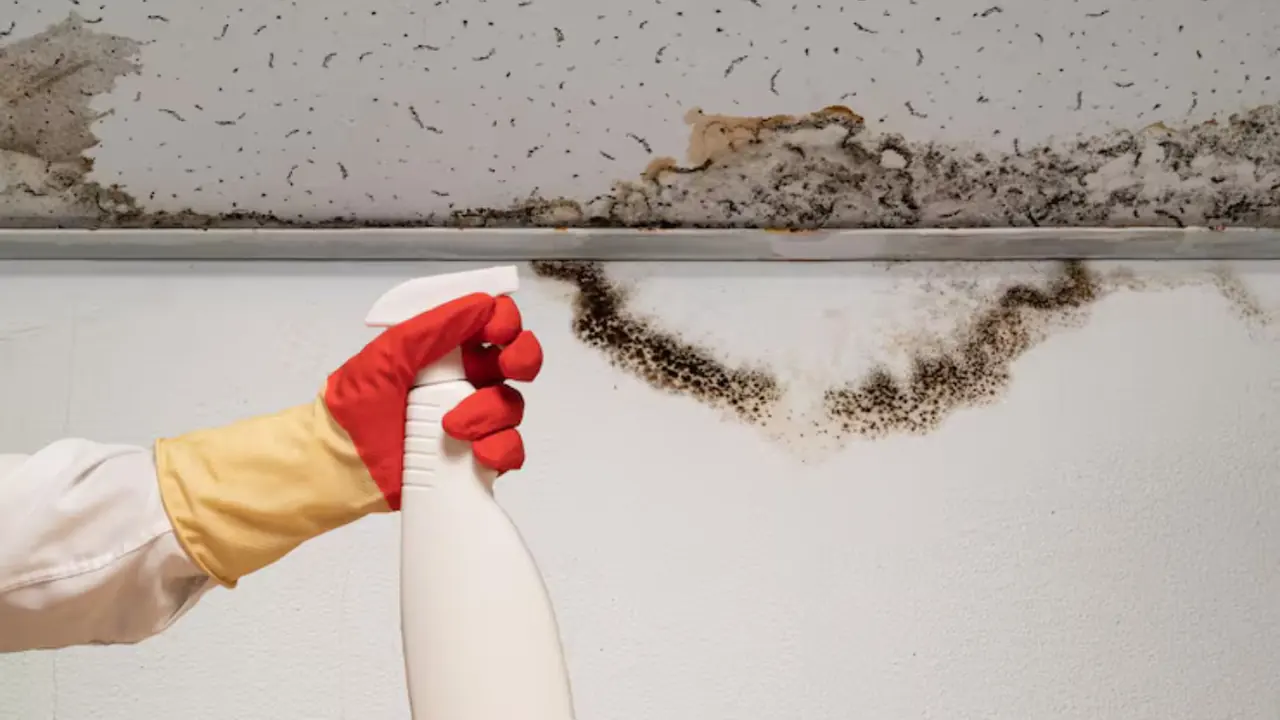
Mold needs moisture to grow. A patch of dark spotting on a ceiling means that spot has been damp, either once for a long time or repeatedly for short stretches. Wipe it off and the same damp spot will usually grow it back, because the leak or the condensation never stopped.
So the job is detective work. Where is the water coming from, and is it still arriving? Three sources account for most ceiling cases: the roof, a pipe, or warm indoor air condensing on a cold surface in the attic.
Roof leak, plumbing or attic condensation
| Clue | Roof leak | Plumbing leak | Attic condensation |
|---|---|---|---|
| When it shows up | After rain, sometimes days later | Any weather, often when a fixture runs | Cool mornings, humid stretches |
| Where the stain sits | Below a roof penetration, valley or flashing | Along a pipe route, under a bathroom or laundry | Broad and uneven, often near vents or ducts |
| What you see in the attic | Dark rings on sheathing, wet insulation near the leak | Drips on the pipe or a damp drain line | Damp nail tips, wet sheathing, damp ductwork |
| Who fixes the cause | Roofer | Plumber | Ventilation or duct repair contractor |
A moisture meter and a thermal camera help here. They show damp drywall that still looks dry and let a crew trace water along a joist before anything is opened. A flashlight and a careful look from the attic hatch can tell you a lot too, but do not walk on ceiling drywall or step between joists blind.
One quick test: run the upstairs shower for ten minutes with someone watching the ceiling below. If the stain darkens, plumbing is the suspect. If it only changes after rain, think roof. A bathroom fan that vents into the attic instead of outdoors is a classic condensation cause.
Ceiling stain that keeps coming back?
Call the 24/7 line and describe where the stain sits and when it changes. Scope and price get laid out for you before any work begins.
Call (818) 337-2642When to stop DIY and call
Some jobs are reasonable to handle yourself once the leak is fixed and the area is dry. Others are not. Stop and call a crew if any of these apply:
- The drywall is sagging, bubbled or soft, which means water has pooled above it.
- Insulation above the stain is wet or dark.
- The growth covers more than a small spot or has spread to a second room.
- The ceiling has a textured finish and the house may predate 1978.
- The water came from a drain, toilet or any source that may be contaminated.
- It keeps coming back after you clean it.
Scrubbing mold on a ceiling puts material into the air of the room, and a sagging ceiling can drop. A crew seals the room off with poly sheeting, then runs HEPA filtration, cuts out the affected drywall and finishes with a HEPA vacuum. That is the work described on the mold remediation page, and it follows ANSI/IICRC S520 practice.
What to write down before anyone arrives
Note the room above the stain, the date you first saw it and whether it changes after rain, a shower or a heating or cooling cycle. Take a photo of the spot each day with a coin or tape measure beside it for scale. A pattern over three or four days tells a crew more than a single look.
If you can safely reach the attic hatch, look for matted insulation, rusty nail tips and dark rings on the roof boards. Do not climb in if the floor is not boarded. Describe what you see on the call instead.
After the source is fixed
Once the moisture is gone, the damaged ceiling has to be dried and rebuilt. Wet insulation is replaced, drywall is cut back to clean material, and the patch is primed and painted. Painting over mold without removing it only hides it. That rebuild falls under water damage repair.
If the ceiling is wet from a recent leak, drying equipment may be needed inside the cavity above. Do not close up a repair until moisture readings confirm the framing is dry.
Testing and who to hire
According to the state health department, California has no rules covering mold inspection, assessment or remediation, and it does not license mold assessors. That puts the burden on you to ask good questions. Ask any company what standard its crews follow, whether it will take moisture readings, and how it will contain the work.
If you worry about what mold exposure does to you, see a physician. A restoration crew finds the moisture, removes affected materials and dries the structure. It does not diagnose illness.
Local note: older ceilings and what they may contain
The city's January 2021 Housing Element background report puts most local homes, 73 percent, ahead of 1989. Construction peaked in the 1980s at 37 percent, and older neighborhoods date to the 1960s through the 1980s. Roofs, attic ventilation and plumbing in homes that age have often been repaired, patched or extended. That makes a layered cause common, so a moisture check is worth more than a guess.
The Contractors State License Board warns that asbestos may be present in buildings constructed or remodeled from 1945 to 1978. Separately, the EPA lead rule covers paid jobs that disturb paint in pre-1978 homes. If your ceiling is textured or painted and the house is from that era, ask about testing before anyone scrapes or sands it.
Frequently asked questions
Is every dark spot on a ceiling black mold?
No. Dust, soot, water staining and several kinds of mold can all look dark. Color alone does not identify the cause, so do not rely on it. What the spot tells you is that moisture has been there, so find the source first.
Can I paint over it with a stain-blocking primer?
A primer can cover a stain, but it does not remove growth or fix the moisture beneath it. If the damp source is still active, the spot will likely return through the paint. Remove affected material and dry the area before any cosmetic work.
Do I need a mold test before I call someone?
Not to start. The first priority is stopping the water and drying the area. Testing can be useful when you need to know the extent, and the CDPH notes that mold assessors are not licensed in California, so ask what a tester's experience and method are.
How soon should I act on a wet ceiling?
Quickly. The EPA's drying target is 24 to 48 hours. Past a day or two of staying wet, porous materials can be candidates for removal, per CDPH. Ceiling drywall and insulation are both porous.
Does the age of a Calabasas home change how a moldy ceiling is handled?
It can. With homes built before 1978, textured ceilings and older paint may involve asbestos or lead rules, so ask about testing before scraping. Beyond that, a house from the 1980s often has older roofing, ducts and plumbing that deserve a look. The same checks apply to ceiling calls from Westlake Village and West Hills.