
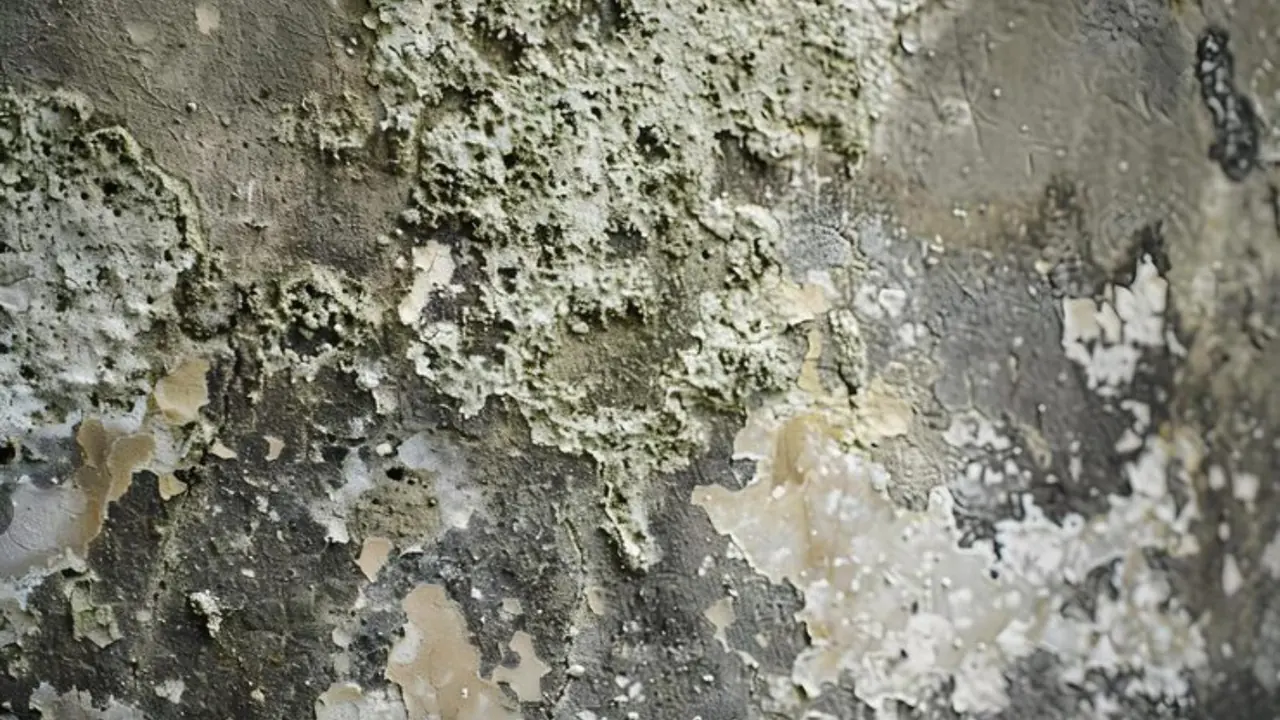
What the two words really mean
Mold is the general term for a large group of fungi that grow on damp material. Mildew is an everyday word, used most often for flat, powdery or downy growth on surfaces like shower walls, window sills and fabric. It is not a separate category with its own cleanup rules.
Black mold is a popular label, not a diagnosis. Many species look dark, and many dark stains are not mold at all, such as soot, dirt, or old water staining. So the useful question is not which name fits. It is how wet the material is, how deep the growth goes and what is feeding it.
Telling them apart by behavior, not by label
Appearance gives hints, but behavior tells you more. Use the comparison below as a rough sorting guide for what you are dealing with, not as a way to name a species.
| Clue | More like surface mildew | More like established growth |
|---|---|---|
| Texture | Flat, powdery or thin film | Fuzzy, slimy or clustered, sometimes raised |
| Wipe test | Mostly lifts off with detergent and water | Leaves a stain, or the paint lifts with it |
| Material | Tile, glass, sealed paint | Drywall paper, wood, ceiling tile, carpet edge |
| Return time | Slowly, after humid spells | Quickly, even after cleaning |
| Smell | Faint or none | Persistent musty or earthy odor |
| Size and spread | A limited area near the moisture | Growing across a wall or into corners |
If a patch returns in a couple of weeks, spreads beyond its first footprint or sits on porous material, treat it as a moisture problem and not a cosmetic one. The growth is the symptom.
Not sure what that dark patch is?
Ring the 24/7 line and say where it is and how long it stayed wet. You get the scope and price up front, before work starts.
Call (818) 337-2642Why color is not a reliable identifier
One species can appear green, white, gray or black depending on its age, the surface it is growing on and the light. Two different species can look identical. A black patch on a bathroom ceiling and a black patch behind a leaky sink might be completely different organisms.
That is why neither a restoration crew nor a homeowner should claim to know the species from the look of it. Naming the type takes laboratory analysis of a sample, and even then the result does not tell you who in the household may be affected. Questions about health go to a physician, and we do not diagnose or give medical advice.
Does testing change what you do?
Usually it does not. The EPA's approach to home mold is that visible growth should be dealt with by fixing the moisture and cleaning or removing the materials, whatever the species. A lab report can be useful in a dispute or when the source is hidden, but it rarely alters the physical steps.
The state sets no indoor mold exposure limits, as CDPH confirms, which means a lab result has no legal threshold to be measured against. California also has no state license for mold assessors or remediators. If you hire anyone, ask for references and a written scope.
- Find and stop the water.
- Dry the structure, using moisture meters to confirm.
- Clean hard surfaces with detergent and water, and dry them fully.
- Take out porous materials that sat damp beyond a day or two, which CDPH says may be necessary.
- Repair and repaint once the readings are normal.
Those steps are the same for a patch called mildew and a patch called black mold. What changes is scale. A small, surface patch can be a household job. A large area, or one inside a wall, calls for mold remediation with containment and HEPA air scrubbing following ANSI/IICRC S520 practice.
Where drying fits in
Mold needs moisture, so the water side comes first. After a leak, water mitigation dries the building with air movers and dehumidifiers. If you are still finding wet drywall, water damage cleanup strips out whatever is beyond saving before rebuilding begins.
No process can promise mold will not return. The most reliable protection is a dry building, which means a working fan, sealed seams, quick attention to leaks and a plan for storm season.
Insurance often turns on the cause
Mold that follows a sudden covered event may be handled differently from mold born of a slow leak, so ask your insurer how your policy reads. Photograph the growth and keep receipts. The crew has no say in the claim decision.
Calabasas weather and where mold shows up
At the nearby Woodland Hills station, NOAA's 1991 to 2020 normals put every month from June to September below 0.1 inch of rain. Dry summers mean growth in those months almost always has an indoor source such as a shower, a sink leak or an air conditioner condensate line. Look at your plumbing and ventilation before you blame the weather.
The wet season runs December through March, and the CDPH notes that California has no state indoor mold exposure limits. Together, that means the best Calabasas habit is simple: after any winter storm leak, dry wet areas promptly, because the EPA says drying within 24 to 48 hours means mold usually will not grow.
Frequently asked questions
Is black mold always more serious than other colors?
Not by color alone. Dark growth can be several species, and light-colored growth can be just as established. What matters is the moisture, the material it sits on and how far it has spread.
Can I identify the type of mold on my wall myself?
No. Appearance varies with age and surface, and only laboratory analysis identifies a type. Since the cleanup steps barely change, most people spend their effort on stopping the moisture instead.
Is mildew easier to clean than black mold?
Surface growth on tile or sealed paint usually cleans with detergent and water. The same method does not work on growth that has gone into drywall or wood. The deciding factor is the material, not the name.
Should I test the mold in my home?
Testing can help in a dispute or where growth is hidden, but visible mold generally needs the same actions with or without a result. Ask a remediation company what a test would change before paying for one.
Do dry Calabasas summers mean mold is not a concern here?
No. Dry outdoor air does not stop growth from a leak, a shower or a condensing pipe inside the house. Crews across Topanga and West Hills see the same indoor causes, so check plumbing and fans year round.