
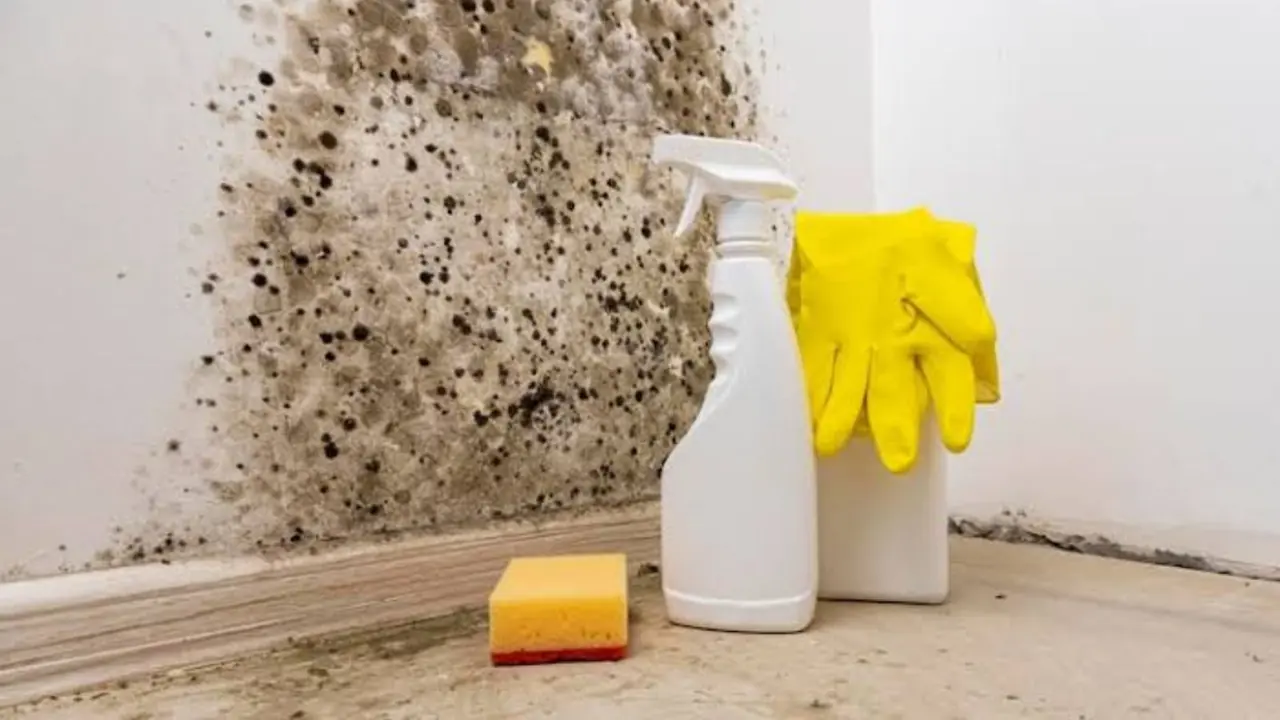
Fix the water before you touch the mold
Mold needs moisture to grow. Cleaning a wall while the leak, the condensation or the roof drip is still feeding it just resets the clock. The EPA's cleanup guidance says to fix plumbing leaks and other water problems as soon as possible and to dry all items completely.
So the first job is detective work. Is the wall cold and sweating, is there a stain from above, or is there a pipe, window or exterior wall on the other side? Until you can name the source, any cleanup is temporary.
Small patch or large area? A decision guide
The state and federal guidance describes cleanup in general terms, so the sorting below is based on behavior, not on a magic number. Treat any answer in the right-hand column as a reason to bring in help.
| Question | Likely a small job | Bring in a pro |
|---|---|---|
| Where is it? | One spot on a hard, painted surface | Spread across a wall, in corners and on the ceiling too |
| What is under it? | Tile, sealed paint, glass | Drywall paper, wallpaper, insulation, carpet edge |
| Why is it there? | A cause you found and fixed | Source unknown, or a leak inside the wall |
| How long was it wet? | Dried within a day or so | Damp for days or longer |
| Does it come back? | Cleaned once, stayed clean | Returns after cleaning |
Drywall, ceiling tile and insulation are porous, and CDPH guidance says such materials can need removal once they sit damp past a day or two. Scrubbing the face does not reach growth that has moved into the material.
Mold on a wall that keeps coming back?
Ring the 24/7 line to go over the source and the extent. You get the scope and price in plain terms before work starts.
Call (818) 337-2642Cleaning a small patch on a hard surface
If your answers point to a small job, wear gloves, eye protection and a well-fitted respirator. Open a window if the weather allows, and keep the fan blowing outward.
- Stop the moisture source and let the area dry.
- Wipe the growth with detergent and water, and change cloths often, so you are not spreading it.
- Dry the surface completely, with a fan or dehumidifier if needed.
- Bag the cloths and sponge before carrying them through the house.
- Watch the spot for a few weeks. Fresh staining means moisture is still present.
If the paint blisters after cleaning or the wall feels cool and damp, stop. The problem is behind the surface, and rubbing harder will only open the paint film. If health questions come up while you are around mold, talk with a physician. We do not diagnose or give health advice.
When the wall itself has to open up
A large or recurring problem is handled differently. A remediation crew sets containment with plastic sheeting and negative air, runs HEPA filtration, removes the affected drywall and insulation in sealed bags, cleans framing and then dries the cavity before anyone closes it up. That work follows ANSI/IICRC S520, the published standard for mold remediation.
The sequence matters. If mold came from a leak, the water mitigation stage dries the structure first, then mold remediation removes growth and contaminated material. Reversing the order leaves moisture in the framing.
Rebuilding is its own step. Once the readings are normal, new drywall, texture and paint are part of water damage repair. Ask who is handling it so there is no gap between demolition and repair.
Hiring in a state with no mold licensing
Per CDPH, the state sets no rules for mold inspection, assessment or remediation, and assessors face no training or licensing mandate. General contracting is a separate matter, because CSLB licensing applies once a job reaches $1,000 in labor and materials, so ask to see it.
- Ask for references and call at least two.
- Ask for a written scope that names the rooms, the containment, the materials to be removed and how drying will be confirmed.
- Ask whether the crew works to ANSI/IICRC S520.
- Get three bids for larger jobs and put the plan in a written contract.
- Be wary of anyone who promises mold will never return, since no honest contractor can.
Older homes add one more question. In houses built before 1978, paid work that disturbs painted surfaces falls under the EPA's lead renovation rule, so ask how a contractor handles that before sanding or demolition begins.
Insurance and wall mold
Cause matters more than the mold
Coverage usually turns on how the moisture got there. A sudden pipe failure is a different story from a slow leak or years of neglect, and policies often treat them differently. Check your policy, photograph everything and ask your insurer before tearing out materials.
Calabasas homes and the age of the walls
In the city's Housing Element, 73 percent of homes predate 1989, and the 1980s alone account for 37 percent. Walls from those years have had decades of caulk, paint and plumbing changes, and hidden seepage tends to be found at old penetrations such as window frames and pipe chases.
Of the 9,230 units counted for 2020, roughly three in four are single-family houses. If you live in one, start your hunt on exterior walls and around plumbing fixtures. Homes in Agoura Hills and West Hills of similar age follow the same pattern.
Frequently asked questions
Is painting over mold on a wall enough?
No. Paint seals the surface but does not remove growth, and moisture will keep working underneath. The patch usually shows through again. Remove the growth and fix the water source before any primer or paint.
Does a wall need to come out if mold is on the paint?
Not always. Mold on a hard, painted surface from surface condensation can often be cleaned and dried. If drywall stayed damp past a couple of days, CDPH guidance says it may need removal, and a moisture meter reading helps decide.
Do I need testing before cleanup?
Usually the visible growth is enough to act on, and lab results rarely change the cleanup steps. Testing can help with a dispute or a hidden problem. California has no license for assessors, so ask for references and a written scope.
Is bleach the best way to kill mold on walls?
Detergent and water on hard surfaces is the starting point in EPA guidance, and removal of affected porous material matters more than any spray. Never mix cleaners, and ventilate. A remediation crew decides what product suits the surface.
How do I tell whether mold on a Calabasas exterior wall comes from the roof, the pipes or condensation?
Check the timing. Growth that appears after winter storms, and tracks along a ceiling line, hints at the roof. Growth near a bathroom or kitchen wall hints at plumbing. A cold exterior wall in a closed bedroom hints at condensation. Moisture mapping settles it.