
The 24 to 48 hour window
The EPA's guidance is direct: get wet areas and belongings dry inside 24 to 48 hours. It adds that if damp materials are dried inside that window, in most cases mold will not grow. After that, the odds shift the other way.
Carpet is where that clock matters most, because it is built from layers that trap water. A spill can leave the top feeling nearly dry while the backing, pad and floor beneath stay saturated. Many people only learn that when a musty smell shows up days later.
Four layers, four different problems
| Layer | What the water does | Usual outcome |
|---|---|---|
| Carpet face and backing | Wicks water, can stain or delaminate | Often dried and kept if the water was clean and found early |
| Pad (cushion) | Soaks like a sponge and dries slowly | Usually removed and replaced |
| Tack strip and edges | Wood strips hold moisture at the wall line | Checked, replaced if damp or stained |
| Subfloor (plywood or concrete) | Absorbs and releases moisture slowly | Dried and measured with a meter before anything goes back |
The pad is cheap and absorbent, which is why crews often remove it even when the carpet itself is saved. The subfloor is the layer you cannot see, and it is the one that needs a moisture reading before new pad goes down.
Wet carpet and a musty smell?
Call the 24/7 line. We will check pad and subfloor with moisture readings, and you will hear the scope and price before any work begins.
Call (818) 337-2642Dry in place or replace
Three questions decide it: what kind of water, how long it sat, and whether growth is already visible. Under ANSI/IICRC S500, clean water from a supply line caught within a day or two is the best case for saving carpet. Category 2 and Category 3 water, such as sewage, usually means carpet and pad come out.
- Clean water, found early, no odor: carpet is often lifted at a corner, the pad is removed, and air movers dry the floor and carpet back.
- Gray water or water that sat for days: carpet and pad are usually replaced, and the subfloor is cleaned and dried.
- Sewage or flood water: removed and disposed of, then the floor is sanitized. See the flood damage restoration approach.
- Visible growth or a persistent odor: treated as a mold job under mold remediation, with containment and removal following S520 practice.
The state health department adds that porous items left soaked for over a day or two can need removal. Carpet and pad are both porous, which is why a cautious crew leans toward replacement once the window has passed.
How wet carpet is dried when it is saved
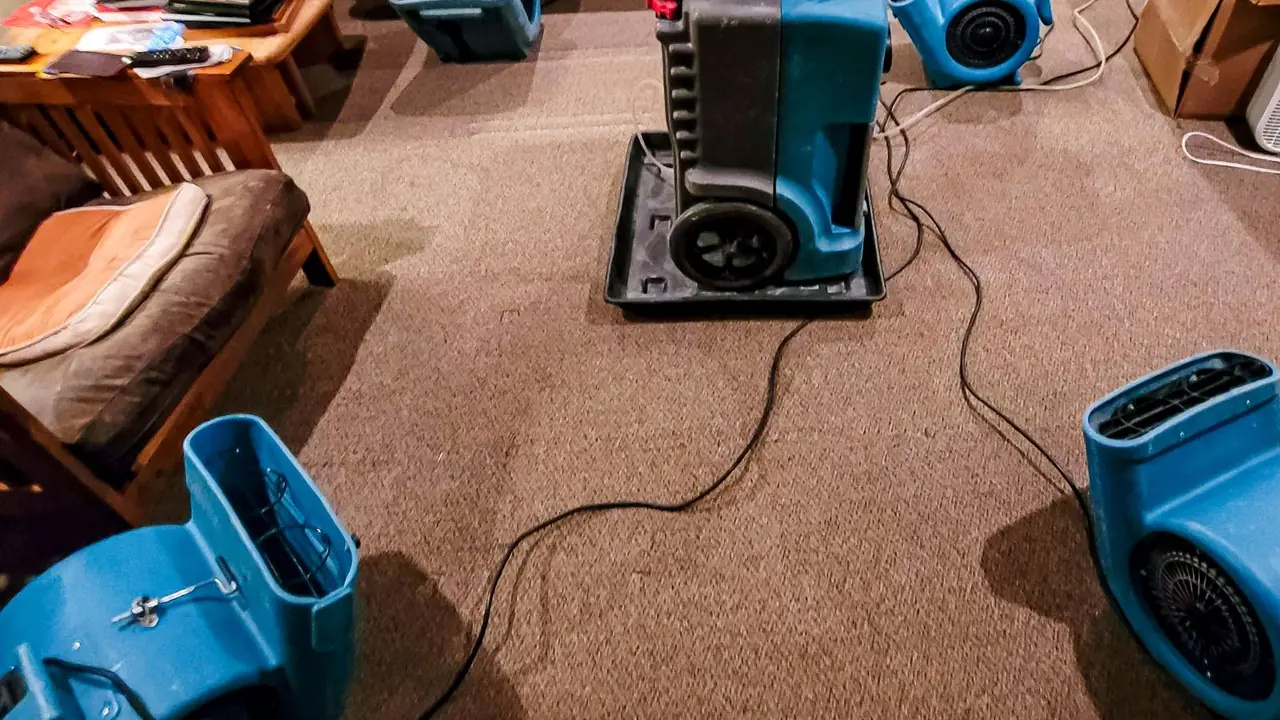
A crew first extracts as much water as possible with a weighted extractor. The pad comes out, and the carpet is lifted and supported so air can move beneath it. Air movers push dry air through the gap, and a dehumidifier pulls moisture from the room. Readings on the carpet, the tack strip and the subfloor guide each day's decisions.
If you are doing this yourself, a rented fan on top of wet carpet dries the surface and little else. That is the common DIY failure. The water mitigation page describes the first 24 to 72 hours in more detail.
What to do in the first hours
Shut off the water source and blot or extract standing water from the carpet. Open the room to airflow if the weather allows, and run a dehumidifier if you own one. Pull furniture off the wet area and put foil or plastic blocks under the legs so stains do not transfer.
Lift one corner of the carpet at a wall to see whether the pad is wet. Do not pull more than that if the water may have been dirty. Photograph what you find, and call a crew the same day if the pad is wet, since the clock is already running.
Signs mold may already be in the carpet
- A musty or earthy smell that returns after cleaning.
- Dark or discolored spots on the carpet backing, the tack strip or the baseboard.
- Carpet that feels cool or damp days after the spill.
- Staining on the subfloor or wall base where you can see it.
- Rippling carpet, which suggests moisture beneath.
Do not rip up a large moldy area dry. Disturbing it spreads debris through the room. A crew sets containment, mists or HEPA vacuums as appropriate and removes material in sealed bags. Questions about health effects belong with a physician, and a restoration company does not diagnose them.
Local note: when the rain comes and when it does not
Monthly rainfall normals for 1991 to 2020, taken at a station in Woodland Hills, put the wettest months are December through March: about 2.66 inches in December, 3.73 in January, 4.62 in February and 2.66 in March. June through September are each under 0.1 inch. The annual total from those normals is about 16.41 inches. Wet-season carpet problems tend to come from roofs, doors and window sills, and from closed-up rooms that dry slowly.
The EPA drying window does not care about the season. A supply line or water heater can wet carpet in August as easily as a window leak in February. If you are in Calabasas, Topanga or West Hills, count 24 to 48 hours from the moment the carpet got wet, not from when you noticed the stain.
Frequently asked questions
Can carpet grow mold if the top feels dry?
Yes, because the pad and subfloor hold moisture longer than the surface does. A moisture meter reading at the backing and the floor is the only reliable way to know. Touch alone is not enough.
Is the pad always thrown away?
Often, though not always. Pad soaks up and holds water, and it is inexpensive to replace compared with the risk of leaving it wet. After contaminated water, it is nearly always removed.
Is mold on carpet always a full replacement?
For visible growth on the carpet itself, usually yes. A crew removes the affected carpet and pad, cleans the floor and checks the subfloor. Small stains on the edge may be treated differently, so ask the crew to explain what they found and what they will do.
Does a dry Calabasas summer mean wet carpet will dry on its own?
No. In the same Woodland Hills normals, June through September each get under 0.1 inch of rain, yet carpet in summer is wet from plumbing, water heaters and air conditioning drain lines, not from rain. A pad under sealed carpet stays wet. The 24 to 48 hour window applies in every month.
Do I need to hire a company for a small spill?
A small clean spill that you blot, extract and fan within a day can often be handled yourself. Anything larger, anything from a dirty source, or anything that has sat longer should get readings. Call the 24/7 line if you are unsure.