
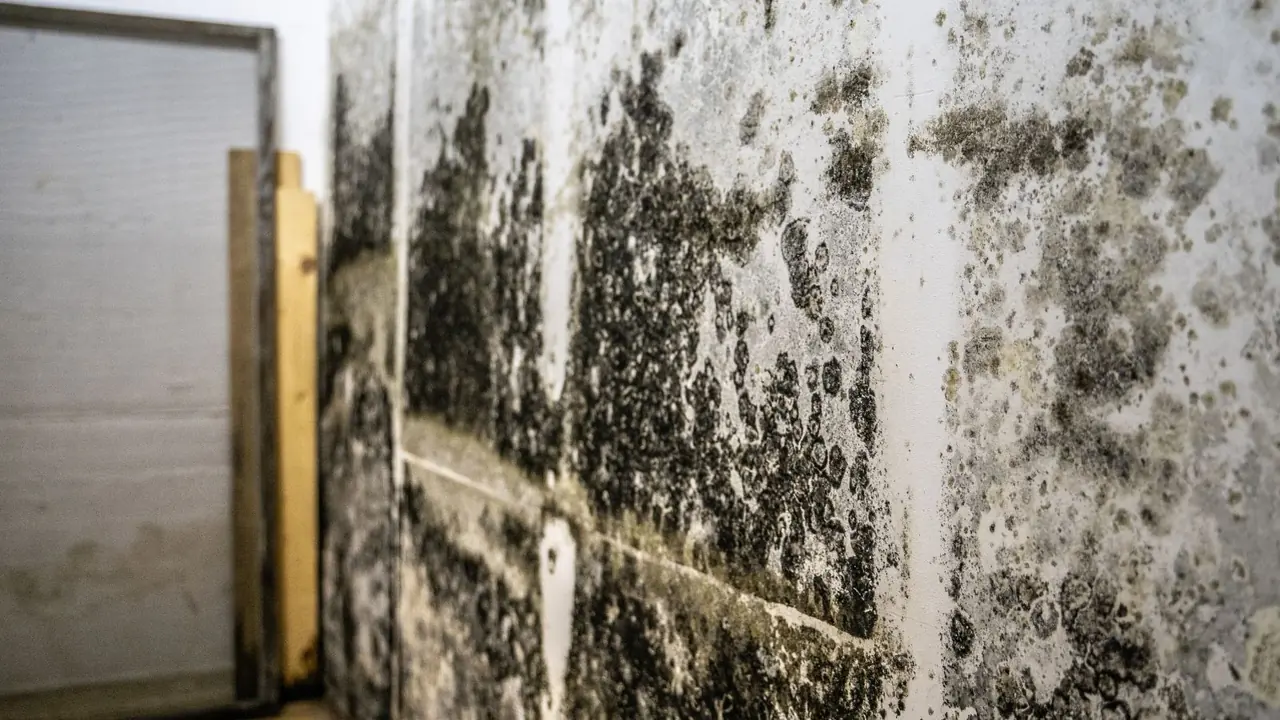
Check what the wall is made of first
Mold on a lower-level wall is not one problem with one fix. The same gray-green patch behaves differently on painted drywall, on poured concrete or block, and on a wood stud. Where a Calabasas house has a lower level or basement, begin by pressing the wall in three places: the stained spot, a spot a foot away, and a spot near the floor.
Drywall goes soft or crumbles at the paper face. Concrete stays hard but may look powdery or crusted white. Wood framing may look dark and fuzzy, or feel soft when a screwdriver tip sinks in. Write down which material you have, because that choice sets what cleaning can accomplish.
Mold needs moisture to grow, so the surface is the second question and the water is the first. A crew working to ANSI/IICRC S520 practice, the published industry standard for mold, finds the moisture source before anything gets scrubbed. If you want to see how that sequence runs, the mold remediation process page walks through it.
Painted drywall: cleaning has a short job
Gypsum board is wrapped in paper, and paper is food. A small patch of surface growth on sealed, painted drywall can sometimes be wiped with detergent and water, then dried completely. Once growth has soaked into the paper or the back side, wiping only removes the part you can see.
Paper-faced board that sat soaked past the one or two day mark is usually a removal job, according to CDPH guidance on porous materials. The EPA drying target is 24 to 48 hours, so drywall that stayed wet longer calls for cutting rather than cleaning.
Warning signs that the problem is behind the paint: bubbling or peeling near the floor, a stained or dark taped seam, a musty smell that returns within days, and baseboards that have swollen. A crew confirms with a moisture meter and a thermal camera, then cuts a clean line a foot or two above the highest wet reading.
Not sure what the wall is hiding?
Call the 24/7 line. A moisture reading tells you more than a sniff test, and you hear the scope and the price before any work begins.
Call (818) 337-2642Concrete and block: scrubbing works, but sealing too early fails
Poured concrete and masonry block do not feed mold the way paper does. What grows there lives on dust, old paint film, wallpaper paste, and stored cardboard. That makes cleaning a real option: a HEPA vacuum, a stiff brush, detergent, a rinse, and a long dry.
White crystals on the wall are usually efflorescence, mineral salt left behind when water travels through the masonry. It is not mold, but it tells you water is moving through the wall. Block cells can also hold water for a long time, so a surface that feels dry may not be.
Do not paint or seal damp masonry. The coating blisters, traps moisture, and hides the next flare-up. Wait until a meter reading matches a dry reference spot in the same house. Never mix bleach with ammonia or other cleaners, because the fumes are dangerous.
Wood framing: clean sound wood, replace soft wood
Studs, bottom plates and sill plates sit lowest, so they stay wet longest. Surface mold on solid, dry wood can be removed by a crew inside containment using HEPA vacuuming, sanding or abrasive cleaning. The wood is then dried and rechecked.
Soft wood is a different story. If a screwdriver sinks in, that is rot, and the member may carry load. Stop cleaning and bring in a licensed contractor, because framing repair is not a scrub job. Under the CSLB threshold of $1,000 in labor and materials, a framing job like this needs a licensed contractor, so ask for the number and verify it.
Insulation in the stud bays is almost always removed once it has been wet and moldy, since it cannot be cleaned back to sound condition. The same goes for paneling and carpet tack strip that touched the wall.
Which material can be cleaned and which comes out
| Material | Cleaning can handle | Removal is likely when |
|---|---|---|
| Painted drywall | Small surface patch on sealed paint | Paper is soft, stained through, or wet over a day or two |
| Bare concrete or block | Surface growth, dust, efflorescence | Never removed for mold alone, but dry it before any coating |
| Painted block | Growth on the paint film | Paint is bubbling because water is moving through the wall |
| Wood studs and plates | Surface growth on sound, dry wood | Wood is soft, split or crumbling |
| Insulation and paneling | Nothing reliable | Wet or moldy, so it goes into sealed bags |
How a crew handles removal safely
Removal stirs up spores, so crews isolate the work area with plastic sheeting and run a HEPA air scrubber that pulls air out through filters. Debris is bagged in the work area, surfaces are HEPA vacuumed and damp wiped, and the room is dried with air movers and an LGR dehumidifier until readings are normal.
CDPH points out that the state neither licenses mold assessors nor sets rules for mold inspection or cleanup, which puts the burden on your questions. Ask whether the crew works to S520, who writes the scope, and whether a separate tester will check the room afterward.
If the wetting started with a pipe or an overflow, the water damage cleanup work happens first, since drying and removing wet materials is what stops growth from spreading.
What a crew will not do
A restoration crew does not diagnose illness, and it cannot tell you whether mold affected your health. Health questions belong with a physician. It also does not decide your insurance claim. Coverage for a burst pipe or sudden overflow is common, slow seepage tends to be excluded, and flood is typically left out, so your insurer is the one to ask.
CDI advice is to make temporary repairs and hold on to receipts, because skipping reasonable protection can put later damage outside your coverage.
Calabasas rain and lower-level walls
The nearest NOAA station with 1991 to 2020 normals is Woodland Hills Pierce College, and its monthly figures add up to 16.41 inches a year. The wet season runs December to March, and February is the peak at 4.62 inches. June through September each average under a tenth of an inch.
That pattern gives you a calendar to work with. Walls that touch soil take on moisture over the wet months and tend to show the damage as the weather turns dry, so a late-spring walk-through of any lower level is worth the ten minutes. Check corners, the base of the wall, and anything stored against it.
Frequently asked questions
Is painting over basement mold a fix?
No. Paint covers the stain but leaves the growth and the moisture in place, and it usually blisters within months. A stain-blocking primer is a finishing product, not a mold treatment.
Fix the water source, remove or clean the affected material, dry the wall, and only then paint.
Is the white powder on my concrete wall mold?
Often it is efflorescence, a mineral salt that crystallizes when water moves through masonry. Mold tends to look fuzzy, spotted or smeared and comes with a musty smell.
Either way, the wall is taking on water. A moisture meter and a look at the outside grade will tell you where it is coming from.
How far above the stain does drywall get cut?
There is no single number. Crews take readings with a moisture meter and cut above the highest wet or affected reading, often a foot or two higher than the visible stain.
The goal is to open the cavity so the framing can dry and so no wet insulation is left behind.
Who do I ask about drainage near my home in Calabasas?
For storm drains and street drainage, start with City of Calabasas Public Works at (818) 224-1600, 100 Civic Center Way. The counter is open Monday through Thursday 8 to 4, closed 12 to 1, and Friday by appointment. The city page lists no stormwater-specific line, so ask the main desk to point you to the right person.
For roof runoff and yard grading on your own lot, a licensed contractor or landscaper can fix it. If you are in a nearby town such as Agoura Hills or Woodland Hills, the same moisture checks apply.
When should I stop DIY cleaning and call a pro?
Call when the wall is soft, the growth is on drywall that stayed wet, the area keeps coming back, or the water came from a sewage or outside source.