
Why a fair number needs more than a photo
Searching for a price usually turns up a range so wide it means nothing. That is because restoration is billed on what the job turns out to need: how much water, what it touched, how long it sat and how long the structure keeps drying equipment running.
We do not list dollar figures here, and you should be wary of anyone who quotes one without seeing the damage or at least asking detailed questions. The useful move is to learn the drivers, then call and get a number tied to your actual scope.
The six factors that decide scope
1. Water category
Clean supply water, gray water and sewage are handled differently under the ANSI/IICRC S500 standard. Category 3 water means more removal, more cleaning and more disposal. Clean water caught early can mean far less demolition.
2. How far the water traveled
A puddle on a tile floor and water that wicked up a wall into insulation are not the same job. Moisture meters and thermal imaging show the real footprint, which is often larger than the visible stain.
3. What the water touched
Drywall, solid hardwood, engineered flooring, carpet and pad, plaster, cabinets and tile each dry or fail differently. Finish level counts. A custom cabinet run or a wide plank floor changes both the drying approach and the rebuild.
4. Time since the loss
To head off mold, the EPA sets a drying goal of 24 to 48 hours. Each day past that can add materials to the removal list. Starting sooner is the one cost factor you control.
5. Equipment and days
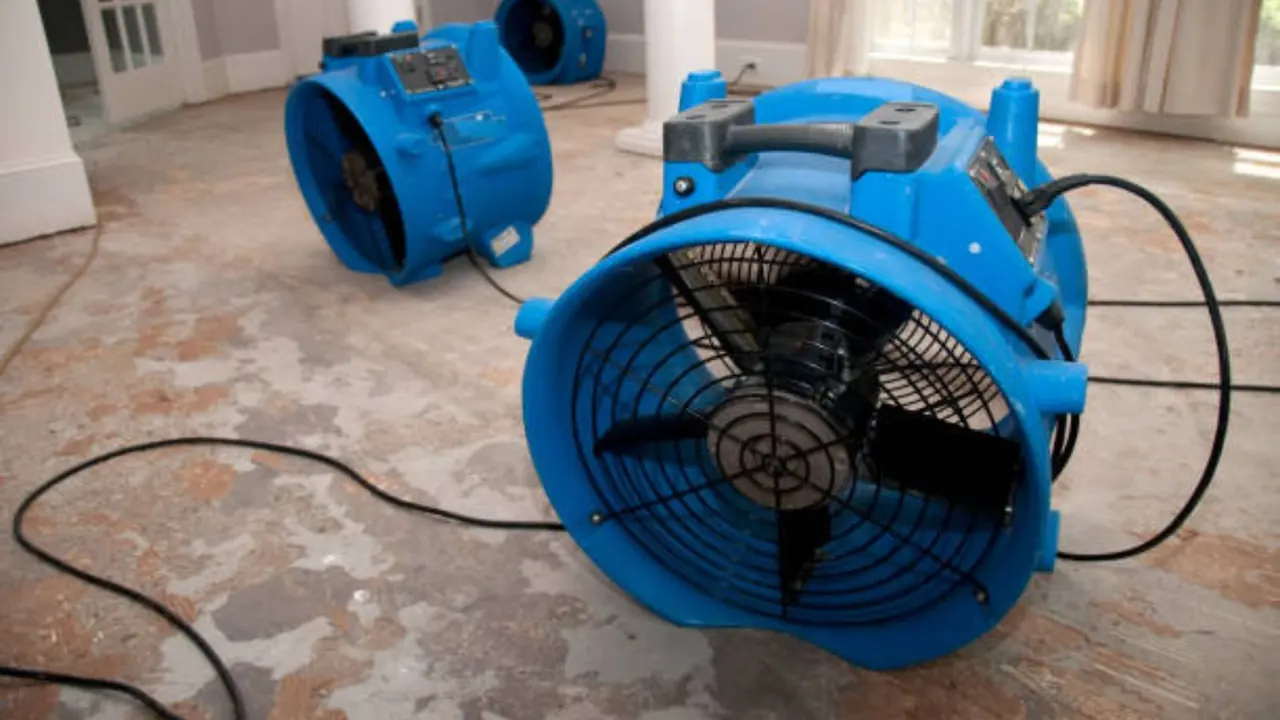
Air movers, LGR dehumidifiers and air scrubbers are counted by unit and by day. A wall cavity that dries slowly extends the schedule. Daily readings decide when equipment leaves, not a calendar guess.
6. Access and rebuild
Tight crawl spaces, second floor loss, stairs and parking all affect labor. Separately, the rebuild after drying (drywall, paint, flooring, trim) is its own scope, covered on the water damage repair page.
Want a real number for your scope?
Call the 24/7 line. Describe the water, the rooms and how long it has been there, and we will go over scope and price with you before the work begins.
Call (818) 337-2642A decision table you can use on the call
| Your situation | What it tends to mean for scope | Ask the company |
|---|---|---|
| Small clean leak, found within a day | Extraction and targeted drying, little demolition | Will you take readings and show me when the wall is dry? |
| Leak behind a wall, found after several days | Open the wall, dry the cavity, possible insulation removal | How will you decide where to cut, and what gets patched? |
| Washing machine or sump overflow | Gray water, carpet and pad often removed | What is removed first, and why? |
| Sewage backup | Contaminated materials removed, sanitizing, disposal | How do you contain and dispose of affected material? |
| Storm or groundwater in a lower level | Larger area, deeper extraction, possible flood cuts | Is this scoped as flood work, and who handles the rebuild? |
| Visible mold with the water damage | Add containment and remediation per S520 practice | What is the containment plan and who tests afterward? |
If your description lands in more than one row, the scope is probably the sum of both. A trained dispatcher can sort that out in a few minutes of questions.
Dry-out and rebuild are two separate jobs
Many surprises come from mixing them up. The first stage is stopping damage and getting the structure dry, which is the focus of water mitigation. The second is replacing what could not be saved. A company can quote one stage clearly and leave the other open, so ask which stage a number covers.
The removal and sanitizing part of the work, including debris and contaminated materials, is described on the water damage cleanup page. Ask for the scope in writing before work starts, with each line item tied to a room.
The same two stages apply whether the house is in Calabasas, Woodland Hills or Agoura Hills. What changes from house to house is the footprint of the wet area, not the way the work is split.
Insurance and the estimate
A burst supply line is the kind of sudden, accidental loss that policies often cover, while a slow leak or neglect frequently falls outside. Your deductible, your policy limits and the cause all matter, and only your insurer can decide coverage. Photos, moisture readings and an itemized scope make it easier to describe the loss, but they do not decide the claim.
If flood or groundwater is involved, a standard homeowners policy usually excludes it. Read your policy and put the question to your insurer ahead of the work.
Local note: older homes and licensed work in Calabasas
Most Calabasas homes are older: the city's Housing Element background report from January 2021 puts 73 percent before 1989, and 37 percent in the 1980s alone. The same report tallies 9,230 units in 2020, roughly three-quarters single-family. In older homes, the materials behind a wet wall may be original, so scope can include extra care with old finishes and a check for hazardous materials before demolition.
California rules also bear on cost. The Contractors State License Board says contractors on jobs above its licensing threshold must hold a state license, and a law effective January 1, 2025 (AB 2622) raised that threshold. CSLB also advises getting three bids, a written contract, and avoiding large down payments or cash. Ask for the license, then check it on the CSLB site.
Frequently asked questions
Why won't a company give me a price over the phone?
Because the same leak can be a small extraction or a multi-room dry-out. A responsible company will ask about the source, the water type, the rooms and the time elapsed, then explain how scope will be set once someone sees the damage.
Does calling sooner really change the bill?
Often, yes. The EPA's 24 to 48 hour drying window is the benchmark. Materials that are dried inside it are more likely to stay in place, while materials left wet longer may need removal and replacement.
What should I have ready when I call?
The source if you know it, when it started, which rooms are wet, whether the water was clean, and whether you have shut off the main valve. Photos help. So does your insurer's claim number if you have already reported it.
Does the restoration company set my insurance payout?
No. The insurer decides coverage and the amount. A restoration crew documents the damage and the work. Questions about what your policy pays go to your insurer.
Does a restoration job in Calabasas have to be done by a licensed contractor?
California requires a state contractor license once a job passes a dollar threshold set by the CSLB, and that threshold was raised by AB 2622 on January 1, 2025. Emergency dry-out work can pass it quickly once equipment, labor and materials are added together.
So ask any company for its license, check it on the CSLB site yourself, and get the scope in writing. The network behind this site works with licensed and insured contractors.