
Signs you can see, material by material
Different surfaces tell the story in different ways. Walk through the house with a flashlight and check each material against the list below, paying extra attention to corners, the bottom foot of any wall and the area under sinks.
Painted drywall
Yellow or brown rings with a darker edge, paint that bubbles or blisters, and seams that show through the finish. Soft, crumbling gypsum when pressed gently with a thumb is a later stage.
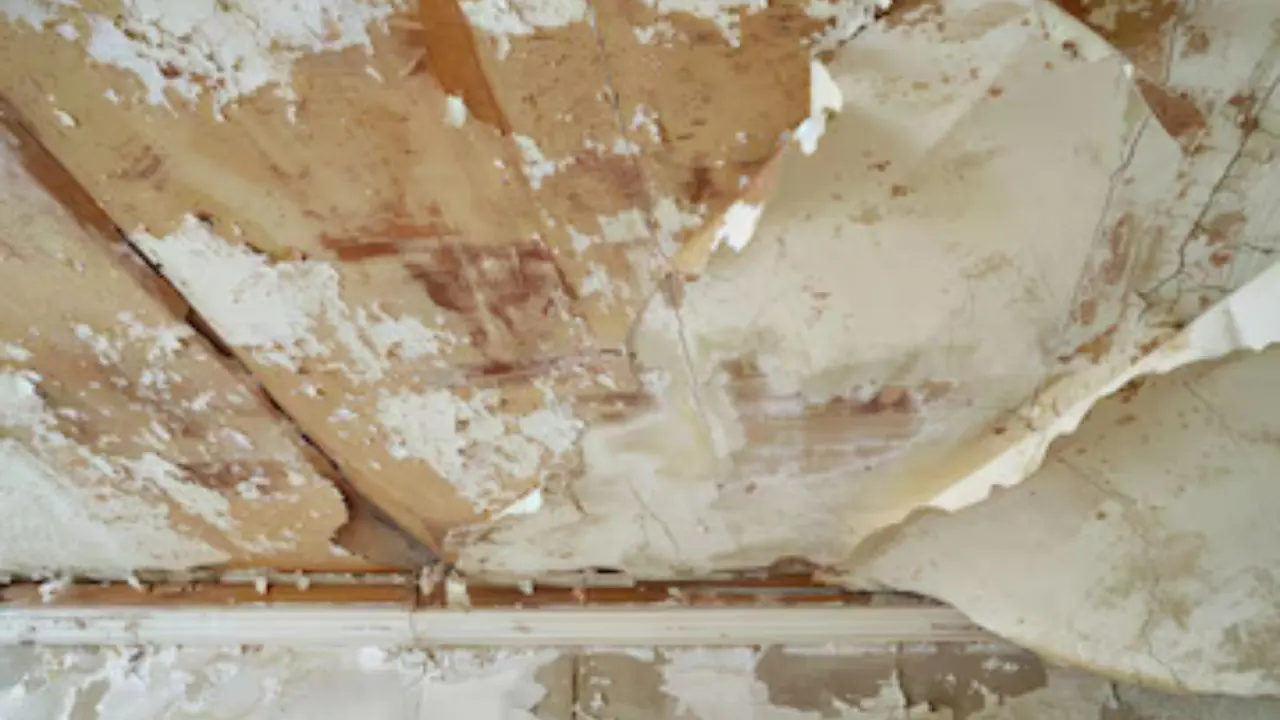
Ceilings
Tan stains that grow after rain or after someone uses the shower above. A sagging patch holds water behind it, so keep people from standing under it.
Hardwood and engineered wood
Cupping, where board edges rise higher than the middle, and crowning, where the middle rises. Dark staining at the seams and a finish that turns cloudy are also common.
Laminate and vinyl plank
Peaked joints, lifted corners and swollen edges. Because the core is often fiberboard, it does not return to its shape after soaking.
Baseboards and trim
Paint cracking along the bottom edge, gaps opening between trim and wall, and softened MDF that dents under a fingernail.
Carpet and pad
Dark patches along walls, a stiff or crunchy feel where it dried, and a smell that returns on humid days even after a clean surface.
Cabinets and vanities
Swollen particleboard at the toe kick, peeling laminate and a dark tide mark on the floor of the cabinet under the sink.
Concrete slab and garage floor
Darker patches that stay cool, white mineral crust and rust bleeding from metal feet. Slabs hold water for a long time without looking wet.
Smells and sounds that give it away
A musty or earthy odor with no visible source is one of the most reliable early clues. It usually points to damp material trapped behind paint, under flooring or inside a wall cavity. If the smell is stronger in one room or near one wall, that is where to start looking.
Listen too. Hollow-sounding tile, a floor that creaks where it used to be quiet and a faint hiss from inside a wall can all hint at a leak. Check your water bill and watch the meter with every fixture off. If it keeps moving, you have a supply leak somewhere.
Seeing stains or soft spots?
Ring the 24/7 line and say what you are looking at. Expect the scope and cost spelled out ahead of any work, and same-day response is offered when available.
Call (818) 337-2642Water categories 1, 2 and 3
Restoration crews sort water by how contaminated it is, using categories from the ANSI/IICRC S500 standard. The category decides which materials can be dried and which must come out.
| Category | Typical source | What it means for the job |
|---|---|---|
| Category 1 | Supply line, tank, sink overflow with clean water | Dry in place when caught early |
| Category 2 | Dishwasher or washer discharge, aged Category 1 water | Cleaning and removal of porous materials such as carpet pad |
| Category 3 | Sewage, creek or storm floodwater, long-standing water | Removal of affected porous materials and disinfecting of what stays |
Clean water can become Category 2 or 3 if it sits or crosses dirty surfaces. That is why a leak that looks harmless on day one can need more work on day three.
Water damage classes 1 to 4
Classes describe how much water the materials absorbed and how fast it can evaporate. They guide how much equipment goes in.
- Class 1: little absorption, a small area, mostly low-porosity surfaces.
- Class 2: a whole room, carpet and pad wet, wicking up the wall.
- Class 3: water that came from above, saturating ceilings, walls and insulation.
- Class 4: deeply held water in low-permeance materials such as hardwood, plaster and concrete, which needs specialized drying.
Ask any company how it classifies a job and what that means for the equipment plan. A clear answer shows they work to the standard rather than guessing.
What you cannot see: finding hidden water
Eyes miss most of it. Water travels along framing, wicks behind baseboards and settles under flooring, so the damage you can spot is often a fraction of the whole.
A moisture meter gives numeric readings in drywall, wood and subfloor. A thermal camera shows cooler, damper zones behind paint. Crews often use both, because a camera shows where to look and a meter confirms how wet it is. Readings are repeated daily, which tells you when drying is genuinely finished.
Once the readings confirm the damp areas, water damage cleanup takes out the materials that cannot be saved, and water mitigation sets the drying equipment. Both pages explain what each stage involves.
Insurance note: document before you dry
Photos first, then cleanup
Photograph stains, bubbling and standing water before anything is moved. Insurers tend to treat a sudden event differently from slow seepage, so the timeline matters. Keep receipts for protection steps and ask what your own policy says. The outcome of a claim rests with the insurer, not the drying crew.
Why winter is when the stains show up
Yearly rain at the nearby Woodland Hills station totals 16.41 inches by NOAA's 1991 to 2020 normals, and February is the wettest month at 4.62 inches. The bulk falls from December to March. If a ceiling stain appears in those months and grows after each storm, a roof, flashing or gutter is the first suspect.
June through September each average under 0.1 inch, so a stain that appears in summer is more likely plumbing, an air conditioner drain line or a leaking appliance. Matching the timing of the stain to the weather is a quick way to tell a plumber or roofer where to start.
Frequently asked questions
What are the first signs of water damage inside a wall?
Look for paint that bubbles, a faint stain that slowly widens, a musty smell near one wall and baseboards that pull away. A moisture meter confirms what the eye only suspects, and a thermal camera maps how far it spread.
Can water damage be present when the surface feels dry?
Yes. Pad under carpet, insulation inside walls and the subfloor beneath hardwood can stay wet long after the visible surface dries. That is why professionals measure moisture content and do not rely on touch.
What does a roof leak stain look like in a Calabasas ceiling?
Tan or brown rings that darken after rain and fade as the ceiling dries, often with a lighter outer ring. Most local rain falls in the winter months, so a stain that spreads between December and March deserves a roof inspection.
How do I know if water damage is old or recent?
Recent damage tends to be damp, darker and soft. Older damage can look dry, with dried tide lines, rust on fasteners and brittle paint. A meter reading helps tell whether moisture is still active, and the answer affects both repairs and an insurance conversation.
Does the water in my home need a category rating from a pro?
It helps. The category sets which materials can be dried in place and which need removal. Crews in Woodland Hills, Topanga and Calabasas assign it on site, since a clean-looking pool can already be Category 2.